
The 2026 SAFE international conference is almost here. The conference starts at 9:00 a.m. Pacific Time. Here is a speaker list for September 25.
| Date: | Time |
|---|---|
| 25-September-2026 | 9:00 PDT |
| 25-September-2026 | 12:00 EDT |
| 25-September-2026 | 17:00 (5:00 pm) BST |
| 25-September-2026 | 18:00 (6:00 PM) SAST |
| 26-September-2026 | 00:00 HKT |
| 26-September-2026 | 4:00 NZST |
Click here to register. SAFE members remember to use your promo code.
Speakers – Times shown are Pacific time
9:00 – 10:00 PDT Yan Xu
Topic: Artificial Intelligence for Handwriting Authentication: From Computer Vision to Vision-Language Models
Bio
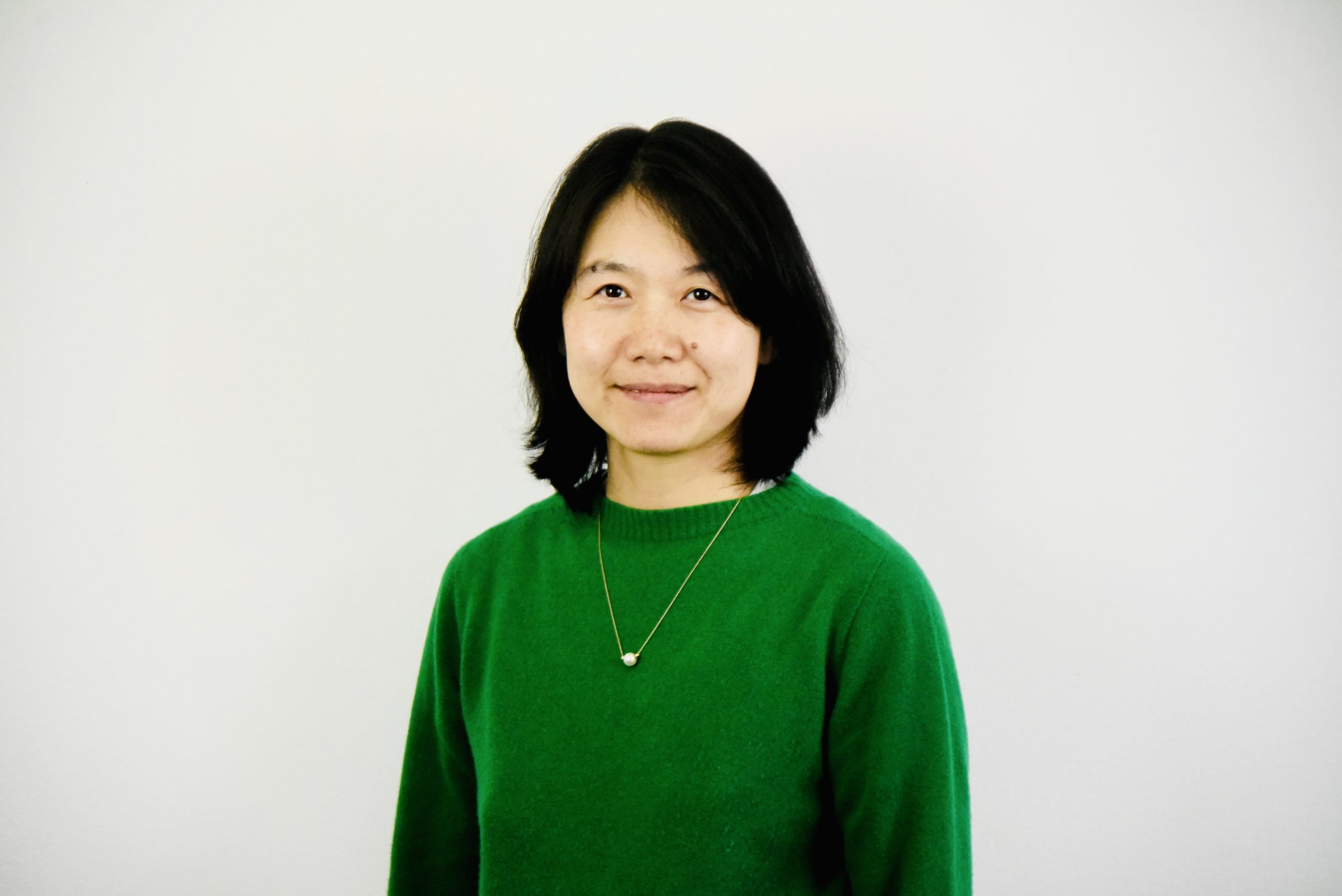 Yan Xu is a Ph.D. Candidate in Computer Science at Concordia University, where she conducts research at the Centre for Pattern Recognition and Machine Intelligence (CENPARMI) under the supervision of Dr. Ching Y. Suen, an internationally recognized researcher in pattern recognition and document analysis.
Her research focuses on computer vision, deep learning, document analysis, and vision-language models, with applications in handwriting analysis and forensic document examination. Her work explores how modern AI techniques can improve the analysis and interpretation of handwritten documents while emphasizing robustness, explainability, and human-centered decision support. She has published research at international conferences and collaborates on interdisciplinary projects at the intersection of artificial intelligence and forensic science.
Abstract
Artificial Intelligence for Handwriting Authentication: From Computer Vision to Vision-Language Models
Recent advances in artificial intelligence have created new opportunities for supporting forensic document examination. This presentation provides an overview of how modern AI techniques—including computer vision, deep learning, and large vision-language models (VLMs)—can be applied to handwriting authentication and document analysis. The talk will introduce the evolution of AI methods, beginning with traditional handcrafted feature extraction and machine learning, followed by convolutional neural networks and transformer-based models, and concluding with the emerging capabilities of foundation models.
Through practical examples, the presentation will demonstrate how AI can assist in handwriting analysis by extracting discriminative visual features, comparing handwriting characteristics, and providing interpretable observations to support forensic experts. The strengths, current limitations, and practical considerations of these technologies will also be discussed, including data quality, model generalization, explainability, and the importance of expert validation. Rather than replacing forensic document examiners, AI should be viewed as a decision-support tool that enhances efficiency, consistency, and research while preserving the essential role of human expertise in forensic handwriting examination.
10:10 – 11:10 Nick Rishwain
Topic: Expert Witnesses and Generative AI: Case Law, Deposition Questions, and Resources
Bio
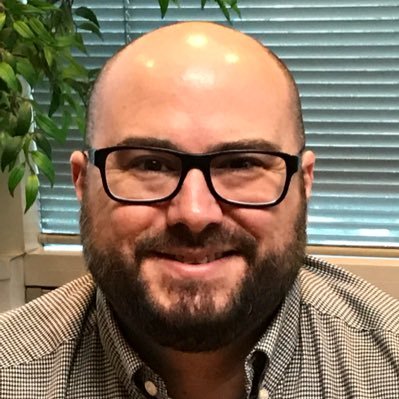 Nick Rishwain is the VP of Client Relations & Development for Experts.com and the founder and host of LegalTechLIVE, a legal technology focused podcast. He is a leader in both the expert witness industry and great legal technology sector. Having been in the legal industry field for nearly 20 years, Nick has a deep desire to and lower the cost of legal services through the use of technology, automate routine and rote work, and improve the legal system. He is an Executive Committee member of the California Lawyers Association, Law Practice Management & Technology section.
11:20 – 12:20 Carl Mueler
Topic: Using AI Without Becoming Exhibit A
Bio:
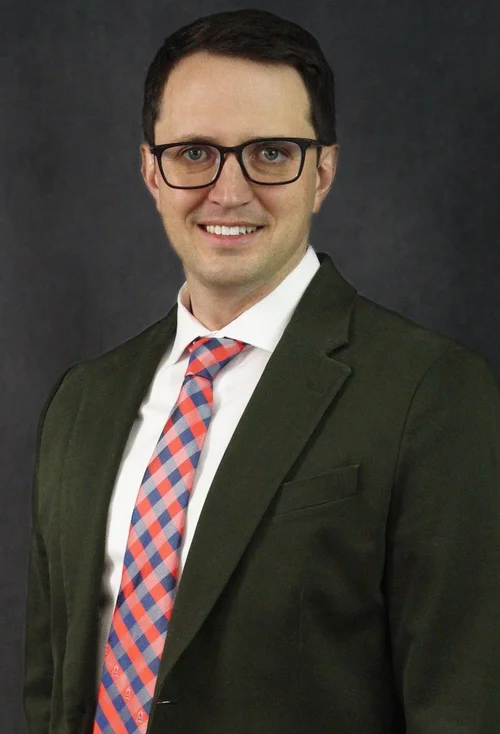 Carl is a trial attorney, focusing his practice on business litigation, general liability claims, and defending disputes between attorneys or accountants and their clients, including claims of malpractice, breach of fiduciary duty, and fee disputes. Carl regularly represents forensic accounting experts in litigation with their clients. He represents clients in state and federal courts, across multiple industries. Carl is licensed to practice in California and Oregon.
Abstract
Artificial intelligence can make an expert more efficient—but used poorly, it can also turn the expert’s own work process into opposing counsel’s best exhibit. This presentation examines how forensic experts can be effective allies to retaining attorneys by understanding the lawyer’s ethical duties surrounding AI, including competence, confidentiality, communication, and independent professional judgment. Using the recent case of an expert who asked ChatGPT to help “show” that his client was 0% at fault—and then faced those prompts at trial—we will explore what not to do, why an expert’s AI use can create risks for the entire litigation team, and practical ways experts and attorneys can work together to use AI responsibly without compromising independence, credibility, or the case.
12:40 – 1:40 Celeste Makoff
Topic: What Cracks Cases – The Metadata Evidence You’re Missing
Bio:
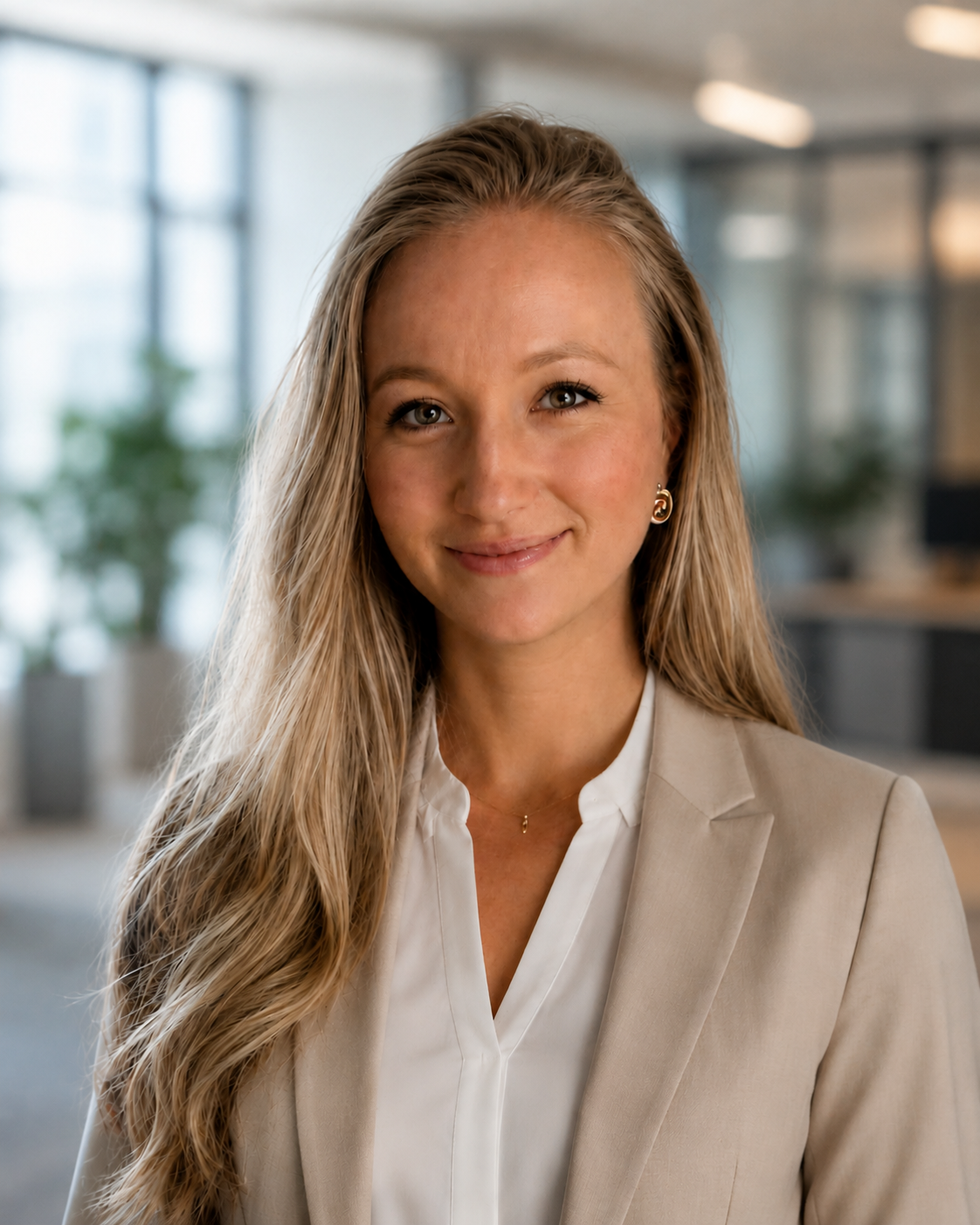 Celeste Makoff, the president of DeepData Forensics, works at the intersection of technology and law, specializing in digital forensics, e-discovery, and document authentication. As a Forensic Deep Metadata specialist, she analyzes complex digital records, recovers hidden information, and presents findings that withstand legal and investigative scrutiny. Her work traces the “life story” of a document—revealing how, when, and by whom it was created, modified, or transmitted. This includes examining metadata, version histories, embedded material, and underlying database structures that remain invisible in standard review. Her forensic practice emphasizes clarity, reproducibility, and methodological rigor, transforming obscure digital traces into reliable, actionable evidence.
Ms. Makoff has developed specialized tools for forensic analysis of documents across dozens of file types, with an emphasis in PDFs—the most commonly manipulated digital document format. Her proprietary technology analyzes thousands of pages for subtle digital manipulation, and she currently provides advanced digital document analysis services. She graduated from New York University with highest honors, ranking in the top one percent of her class. She also serves as a private coach for practitioners in deep metadata analysis and Python and machine learning-assisted document forensics.
Abstract
Every electronic document carries far more than the words on its face. Beneath the rendered page sits a layer of structural and embedded data: creation and modification timestamps, producing application signatures, incremental save history, font and object-level artifacts, and traces of content that was edited or deleted but never truly removed. This one-hour session examines that layer directly, covering where it lives in common formats such as PDF, Word, and email, and how it is created and destroyed as a file moves through drafting, conversion, and production. Live demos will show how metadata can corroborate or contradict a document’s claimed origin and date, reveal prior revisions and undisclosed authorship, expose backdating, and identify when a produced file is a rendition rather than the native original.
Presentation Schedule for October 30, 2026
| Date: | Time |
|---|---|
| 30-October-2026 | 9:00 PDT |
| 30-October-2026 | 12:00 EDT |
| 30-October-2026 | 17:00 (5:00 pm) BST |
| 30-October-2026 | 18:00 (6:00 PM) SAST |
| 31-October-2026 | 0:00 HKT |
| 31-October-2026 | 4:00 NZST |
Click here to register. SAFE members remember to use your promo code.
Speakers
9:00 – 10:30 PDT Carole Chaski
Topic: ALIAS-QDE: Software Support for Questioned Document Examination
Bio
 Carole E. Chaski, PhD is the Executive Director of the Institute for Linguistic Evidence, the first non-profit research organization devoted to research and development in linguistic evidence (founded in 1998) and the CEO of ALIAS Technology LLC (founded in 2007).
Chaski began work in forensic linguistics in 1992 and is credited with pioneering the field of forensic computational linguistics and validation testing of methods independent of litigation. She has developed methods and software for authorship identification, classification of specific discourse types, such as threat letters, suicide notes, child sex-abuse allegations, predatory chats, and deceptive witness statements, text similarity for trademark, copyright and patent infringement, and linguistic profiling. She has consulted on cases in North America, South America, Europe, Asia and Australia. Chaski has served as an expert witness in Federal and State Courts in the United States, in Canada and in The Hague; she has provided unrestricted testimony on linguistic issues in Federal State, and Military courts after Daubert, Frye and Hauser hearings on admissible evidence. She was the first linguist in the United States to successfully undergo a Daubert hearing for the admissibility of authorship identification evidence based on computational linguistics, and the first computational linguist to earn certification as a diplomate of the International Board of Forensic Engineering Sciences.
She has published over 75 abstracts, articles and book chapters in forensic linguistics. Chaski holds a US patent in authorship identification.
Chaski held a Visiting Research Fellowship (1995-1998) at the US Department of Justice’s National Institute of Justice (NIJ). During her fellowship, Chaski worked with the FBI Questioned Document Unit and the Secret Service to develop TWGDOC, the first technical working group on document examination. TWGDOC included both government and private forensic document examiners to create standards for forensic document examination. Chaski also convinced NIJ to fund research on handwriting identification, resulting in Srihari’s CEDAR-Fox.
Later Chaski provided handwriting data to Gannon Technology for testing the FBI-funded FLASH-ID. Chaski’s own software ALIAS: Automated Linguistic Identification & Assessment System now includes ways to support forensic document examiners.
Chaski earned her dctorate and master’s in linguistics (syntax, language variation and computational linguistics) at Brown University, her master’s in psychology of reading (psycholinguistics) at the University of Delaware and her bachelor’s magna cum laude in English and Ancient Greek from Bryn Mawr College.
Abstract
This talk presents a way for professional forensic document examiners to expand their practices in two ways using ALIAS-QDE. ALIAS-QDE is a specialized version of ALIAS: Automated Linguistic Identification & Assessment System. ALIAS-QDE is tuned specifically for issues that arise in forensic document examination.
First, ALIAS-QDE enables forensic document examiners to offer linguistic examinations. These include threat assessment, suicide note authentication, predatory chat analysis, textual similarity between documents, and authorship identification.
Second, ALIAS-QDE provides specific support for handwriting identification. This support includes letter frequency analysis, digraph frequency analysis, conversion of handwriting to electronic text, cropping and extraction of handwriting images, and statistical analysis for similarity of signatures and other handwritten text.
10:40 – 12:10 Thomas W. Repczynski, Esq
Topic: Will-Challenge Litigation: Forensic Expert Cross-Examination
Bio
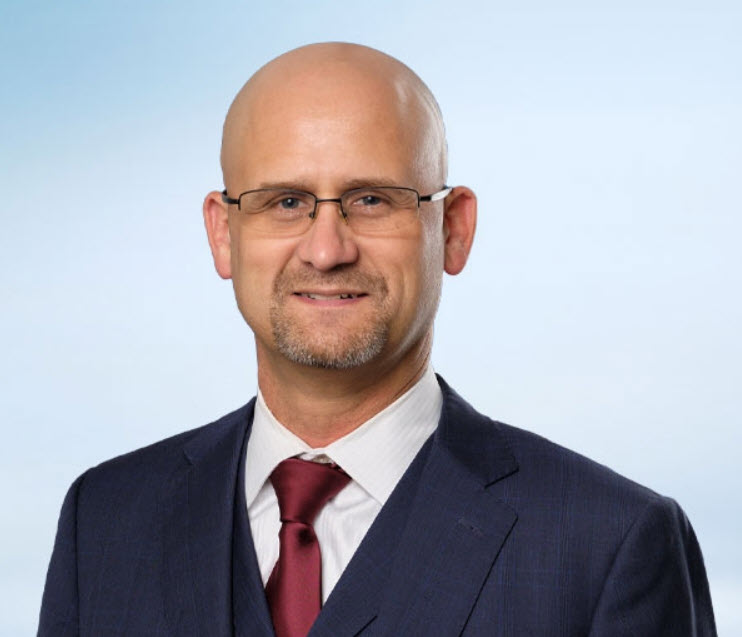 Mr. Repczynski is a principal and shareholder with Offit Kurman in the firm’s Tysons Corner, Virginia office (here in the D.C. Metro area). Tom is a former Practice Group Leader for the firm’s Commercial Litigation practice group; but his full-time focus these days is on expanding the firm’s Estates and Trusts Litigation practice area. His practice includes contested wills and inheritance disputes involving trusts, beneficiaries, fiduciaries, undue influence, incapacity, and breach of fiduciary duty.
Now in his 30th year of practice, Mr. Repczynski has an extensive background in creditors’ rights, bankruptcy, real estate, and general commercial litigation. Tom is licensed in Virginia, Maryland, and DC, and his litigation and dispute-resolution experience spans state and federal courts at all levels, alternative dispute resolution, and administrative proceeding.
Mr. Repczynski earned his A.B. from Dartmouth College and J.D. from George Mason University Law School and is a past president of the Fairfax Bar Association and Northern Virginia Bankruptcy Bar Association. Since 2024, Tom has been recognized by The Best Lawyers in America® for Litigation – Trusts and Estates; Litigation – Real Estate; and Commercial Litigation, and he has been named six times to the annual Virginia Super Lawyers® list for Estate and Trust Litigation.
Mr. Repczynski is a regular contributor on E&T litigation issues to Offit Kurman’s blog, including his early 2026 publication on the topic about which he’ll be presenting.
Away from the courtroom, Tom brings his voice and judgment to very different arenas as a high school football stadium announcer and as a Little League umpire with the Virginia Umpire’s Association, and as a co-host on a soon-to-launch podcast, “Curves and Consequences.”
Abstract:
Estate and trust litigation rarely turns on a single moment, but an effective cross‑examination of the other side’s forensic document examiner may be one’s best shot at that “Perry Mason moment” in a will challenge case. When a testamentary document’s authenticity is in dispute, the expert’s testimony is critical to establishing the foundation upon which one’s entire case rests. Successfully reducing the other side’s document authenticity evidence to a mere guess based on conjecture, or having had the value of one’s authenticity evidence effectively called into question can be the difference between winning and losing. And while jurists routinely remind us that experts are only “advisory,” anyone who has tried one of these cases knows that a confident expert with a clean narrative will tip the scales nearly every time. The inverse is equally true: a shaky expert can single-handedly unravel even the most tightly wound case. Prepare to prepare to be cross-examined by a 30-year litigator who has himself multiple times been retained and identified as an expert witness regarding E&T litigation legal fees.
12:20 – 1:20 Arash Shokouh
Topic: Protecting Your Business from Modern AI Threats
Bio:
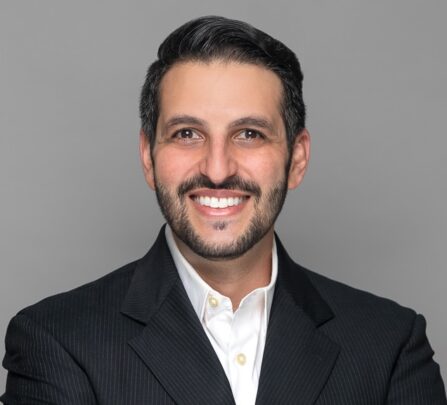 Arash Shokouh is a professional speaker and the founder of Ophtek (pronounced off-tech) LLC and a technology leader with 25 years of experience spanning engineering, IT, and Cyber Security. Prior to founding Ophtek, Arash worked at IBM as a computer engineer on some of the world’s fastest data center systems. He is a published inventor on microprocessor architecture and speaks regularly on the importance of Cyber Security. Arash lectured on Digital Design at the San Jose State University Computer Engineering program, where he earned his bachelor’s and Master of Science in Computer Engineering.
Arash’s work spans many industries, but his expertise has become especially valued in industries with technology compliance requirements to protect data security.
With a background rooted in both hands‑on technical problem-solving and long-term strategic planning, Arash is known for translating complex technology into practical, dependable solutions for organizations across the West Coast. He has helped businesses strengthen their cybersecurity posture, modernize outdated systems, and build scalable environments. His work consistently reflects a commitment to reliability, transparency, and the minimization of IT disruption.
Arash speaks regularly at business associations, non-profits, and conferences where IT compliance is paramount to protecting PHI and PII.
Abstract:
AI is becoming an integrated part of every business. Organizations interact with AI on a daily basis. It’s certain there’s enough sensitive information being collected by AI to cause some major headaches and sometimes bring a business to a halt. Ophtek LLC Owner Arash Shokouh has over 20 years of experience with technology spanning IT, engineering, and cybersecurity. Arash will show you how to implement IT guidelines across your business to combat these modern threats.
Upon completion, the participant shall be able to recognize data security threats by spotting early warning signs, AI-driven scams, and modern viruses.
The participant will have a thorough understanding of protect sensitive information by understanding data theft, black market risks, and key prevention steps.
The participants will be able to Strengthen IT policies by implementing proven strategies to enhance cybersecurity defenses.